





























Backstroke Secrets: How to Dominate Your Next Competition
Discover the essential backstroke techniques to improve your swimming performance and dominate your next competition. Master body position, arm movements, kick technique, and breathing for better efficiency and speed.
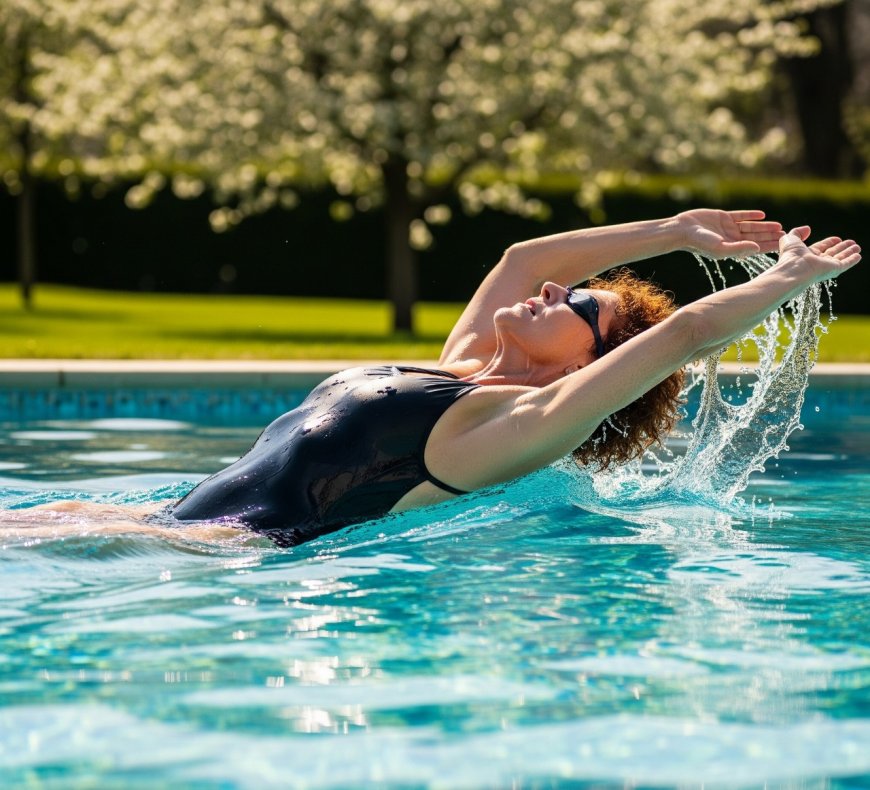
Many people like the backstroke because of how graceful and smooth it is, but it has its own challenges that make it different from other swimming styles. The backstroke is different from freestyle and butterfly because swimmers have to face up, which changes their position in the water and demands them to have excellent balance, coordination, and spatial awareness. This upward-facing position creates unique challenges, such as navigating without direct visibility and depending on lane markers or other peripheral cues to keep track of your progress. To go through the water quickly and easily, swimmers must also try to keep their bodies properly streamlined to reduce water resistance.For more swimming insights, visit Legendary Swimmers.
Mastering the backstroke requires swimmers to pay attention to important details like body positioning and making sure their hips stay high and their core stays tight to avoid extra drag. To do this correctly, your arms need to move exactly right, with a strong, controlled pull and a smooth recovery phase above the water. Also, it's very important to learn how to breathe correctly because breathing incorrectly might throw off your rhythm and balance. To get good at the backstroke, you need to practice it regularly and carefully look over your results, either by watching videos or getting feedback from a teacher. This will help you finetune your technique and improve your speed and efficiency. For more tips and guidance on staying swim-fit, check out Swim Fit. With dedication, swimmers can overcome these challenges and achieve a level of grace and power that makes the backstroke uniquely impressive..
Understanding the Backstroke
A basic swimming move, the backstroke, which is also called the "overarm stroke," is one of the four main categories. Swimmers do the stroke on their backs by moving their arms back and forth and kicking steadily. The face-up position makes it easy to breathe, which is what makes this stroke useful. The backstroke is still a core event in swimming competitions because it looks graceful, but it takes determination, the right technique, and constant effort to master.
Key Components of Backstroke Technique
1. Body Position
Keeping your body in the right position is the key to a good backstroke because it makes the water less resistant and speeds up and makes you more efficient in the water. To have a smooth and effective stroke, you need to align your body, set your head, and stand up straight.
-
Alignment: Ensure that your hips and legs stay high and in line with your body, and keep your back flat and close to the water's surface. This stance cuts down on drag and lets you glide over the water without any problems. Using your core muscles will help you keep this position and stop your lower body from sinking, which can slow you down.
-
Head Placement:Let your head relax and stay steady while your ears are comfortable under the water. To assist you stay balanced and in control, you should look at a fixed point above you, such the ceiling or the sky. A quiet head keeps needless movement to a minimum, which might change your alignment and make it harder to maneuver.
-
Common Mistake:A common mistake swimmers make when doing the backstroke is to lift their heads. Incorrect body posture makes the hips and legs sink, which raises drag and lowers the efficiency of the stroke. Instead, work on keeping your body straight and stable. This will help you swim more smoothly and with more control.
You can improve your backstroke technique and move through the water more easily and quickly if you learn these body position basics. Keep in mind that even little changes to your posture can have a big effect on how well you do overall.
2. Arm Movements
Your arms play a critical role in forward propulsion during backstroke.
-
Pull Phase: Put one arm in the water and start to pull with your hand to push water down past your hip.
-
During the recovery phase, keep the arm that is coming out of the water relaxed. Alternately move each arm to move forward smoothly and continuously.
-
Timing: For a smooth and steady stroke, make sure that your arm movements are coordinated in a rhythmic way.
3. Flutter Kick
An effective flutter kick enhances propulsion while maintaining body stability.
-
Perform the move: Begin the kick from the hips, keeping your legs straight but flexible and your feet loose. Don't let your knees move in a stiff, jerking way.
-
Technique: Short, quick kicks with pointed toes are the greatest way to keep your balance and reduce drag.
-
Common Mistake: Kicks that are too big or out of control mess up the rhythm and slow you down.
4. Breathing Technique
Breathing is significantly easier in backstroke since your face stays above the water.
-
Tips: Synchronize your breathing with arm movements; for example, inhale during one stroke cycle and exhale during the next.
-
Key Reminder: Refrain from lifting your head for air as this disturbs alignment and hinders balance.
Essential Tools and Race Techniques for Backstroke
The Role of Backstroke Flags
Backstroke flags located above the pool serve as important markers. They help swimmers gauge their distance from the wall, ensuring precise timing for turns and finishes.
Mastering Your Start
Swimmers in competitive backstroke races start by holding onto handles on the pool wall. For a powerful start, use an underwater dolphin kick, also known as the "Berkhoff Blast-Off" after Olympic swimmer David Berkhoff who made it popular. This gives the best acceleration at the start.
-
As long as the rules of the tournament allow it, glide under the water and stay in a streamlined position until you come back up.
Perfecting Turn Techniques
Executing effective turns can significantly impact your race performance, helping you maintain speed and conserve energy.
-
Flip Turn: Perfecting a flip turn involves a smooth transition where you roll onto your stomach as you approach the wall, perform a controlled somersault to rotate your body, and plant your feet firmly on the wall. From there, initiate a strong push-off in a streamlined position, keeping your body tight and minimizing resistance as you glide back into your stroke. Mastering this technique ensures a faster, more efficient turn that can shave seconds off your time..
Strategic Race Pacing
Maintaining the right pace in backstroke races determines overall success.
-
Begin with a moderate tempo to conserve energy. Gradually increase your stroke rate toward the final stretch to ensure a strong finish.
-
Incorporate interval training to build endurance and improve pacing skills for better race performance.
Advanced Techniques and Training
Advanced backstroke performance requires consistent dedication and incorporates the following strategies:
-
Technology Integration: Use underwater cameras or performance tracking devices to analyze strokes and kicks for refinement.
-
Cross-Training: Strengthen core muscles and improve flexibility through dryland exercises such as yoga or pilates.
-
Recovery Practices: Stretching, foam rolling, and regular swimming drills help enhance endurance and prevent injuries.
Common Backstroke Rules
Competitive backstroke has strict rules to ensure fair play:
-
Athletes must maintain a face-up position throughout the race except during turns.
-
Flip turns must adhere to regulations, such as initiating the turn within 15 meters of the wall.
-
Familiarize yourself with these rules to avoid penalties and focus on achieving your best.
Frequently Asked Questions
Q1. How can I improve my backstroke efficiency?
Maintain proper alignment, synchronize arm pulls and kicks, and fine-tune your breathing technique. Regular practice and feedback-focused drills will enhance efficiency over time.
Q2. What are the best training strategies for backstroke?
Interval training combined with endurance-building exercises is highly effective. Supplement swimming sessions with core and flexibility exercises for better stability and fluidity.
Q3. Why are backstroke flags important?
These flags are critical for ensuring accurate turns and finishes without disrupting your rhythm. They guide swimmers in timing their movements effectively.
Final Thoughts
Excelling in backstroke requires a combination of technical skill and persistence. Whether you're an aspiring competitor or simply seeking to refine your abilities, focusing on the fundamentals of the stroke while integrating advanced techniques and tools will help you unlock your potential. With structured training, attention to detail, and consistent practice, you can turn the backstroke into one of your most powerful and enjoyable techniques. Keep challenging yourself, and don't forget to celebrate each milestone!

LEGENDARY SWIMMERS
Hi there! I’m , the founder and driving force behind BIP America. With a deep passion for water and wellness, I’ve dedicated my career to empowering individuals of all ages and abilities to harness the restorative and transformative benefits of aquatic environments.
Visit our Website: https://legendaryswimmers.com/