

















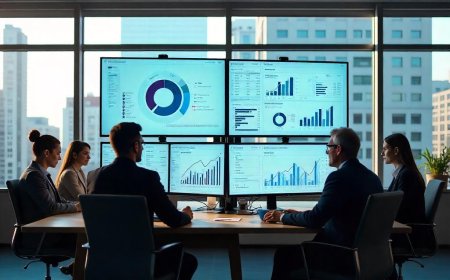











Integrating Smart Sensors for Real-Time Cable Performance Monitoring
Explore how integrating smart sensors (IoT) for real-time performance monitoring of installed cables is revolutionizing asset management and predictive maintenance.


For decades, once an industrial or power cable was installed and commissioned, it largely became a passive, unmonitored asset. Its health was a mystery until a scheduled manual test was performed or, worse, until it failed. This reactive approach is no longer sufficient for managing the critical arteries of our power grids, communication networks, and industrial plants. Today, a technological shift is underway: the integration of smart sensors to provide a continuous, real-time stream of data on a cable's operational performance and condition. This isn't just about collecting data; it's about giving cables a voice, enabling us to listen for signs of stress and predict problems before they lead to costly disruptions.
Why Listen to Your Cables? The Limits of Traditional Methods
Traditional cable asset management often relies on:
-
Scheduled Inspections: Periodic manual checks (e.g., thermal imaging scans, visual inspections) that provide only a snapshot in time and can miss developing issues.
-
Time-Based Maintenance: Replacing or servicing assets based on age, regardless of their actual condition.
-
Reactive Repairs: Fixing failures after they have already occurred, leading to unplanned downtime and often secondary damage.
This approach is inefficient and leaves asset managers blind to the real-world stresses affecting their infrastructure between inspections. Smart sensors aim to fill this critical information gap.
The Smart Sensor Ecosystem: How It Works
Integrating smart sensors for real-time monitoring involves a connected ecosystem:
-
The Sensors: A range of specialized sensors are installed on or alongside the cable. These devices are designed to measure key performance and condition indicators.
-
Data Acquisition & Transmission: The sensors capture data continuously or at frequent intervals. This data is then transmitted wirelessly (using IoT protocols like LoRaWAN, NB-IoT) or via a dedicated communication line (like fiber optics) to a central system.
-
The Analytics Platform: Software platforms collect and aggregate the sensor data. Here, powerful analytics, often incorporating Artificial Intelligence (AI), process the information, visualize trends, compare data against operational limits, and detect anomalies.
-
Actionable Insights & Alerts: When the platform detects a concerning trend or an acute problem (e.g., a sudden temperature spike), it generates alerts for operators and maintenance teams, providing specific, actionable information.
Key Performance Indicators Monitored by Smart Sensors
What "vital signs" are these sensors tracking?
-
Temperature: This is one of the most critical parameters for power cables. Smart sensors can provide real-time temperature data.
-
Hotspot Detection: Pinpointing high-resistance points at joints or terminations that are overheating and are a common cause of failure.
-
Dynamic Cable Rating (DCR): By knowing the real-time temperature and load, utilities can sometimes safely push more power through the cable than its static rating would allow, optimizing grid capacity.
-
DTS (Distributed Temperature Sensing): Using an integrated fiber optic strand as a continuous sensor to provide a temperature profile along the entire length of the cable, not just at single points.
-
Electrical Load: Real-time monitoring of the current flowing through the cable helps in managing network loads, identifying overload conditions, and correlating load with temperature.
-
Partial Discharge (PD): For medium and high-voltage cables, specialized acoustic or high-frequency sensors can detect the small internal electrical sparks that are a key indicator of insulation degradation and an early warning sign of impending failure.
-
Mechanical Strain & Vibration: Strain gauges can monitor the physical stress on a cable, essential for bridge cables, overhead lines, or cables in geologically unstable areas. Vibration sensors can detect issues from nearby machinery or aeolian vibration on overhead lines that can cause fatigue.
-
Ambient Conditions: Monitoring the surrounding environment (soil thermal resistivity for underground cables, ambient temperature, moisture) provides crucial context for interpreting the cable's performance data.
The Transformative Benefits of Real-Time Monitoring
This shift from periodic checks to continuous monitoring brings powerful advantages:
-
Enables True Predictive Maintenance: By analyzing trends over time, asset managers can move beyond scheduled maintenance to condition-based interventions, repairing or replacing assets based on their actual health and predicted failure risk.
-
Maximizes Asset Utilization & Lifespan: By understanding real-time operational limits (like with DCR), utilities can safely optimize the use of their existing assets. By catching issues early, the overall service life of the cable can be extended.
-
Prevents Unplanned Outages: Early warnings of overheating joints or degrading insulation allow for planned repairs, drastically reducing the frequency of sudden, costly, and disruptive power or data outages. This is crucial for maintaining stability in rapidly growing urban centers in India.
-
Improves Safety: Proactively identifying and rectifying potential failure points like hotspots reduces the risk of fires or catastrophic electrical faults.
-
Optimizes Capital Investment: Better data on asset health and utilization allows for more informed decisions about when and where to invest in infrastructure upgrades or replacements.
Real-World Applications
This technology is being deployed across critical sectors:
-
Smart Grids: Utilities are using smart sensors to improve the reliability and capacity of their transmission and distribution networks.
-
Data Centers: Monitoring the power cables feeding server racks to ensure reliability and prevent overheating.
-
Industrial Plants: Tracking the health of critical motor supply cables and control wiring to prevent production stoppages. This is a key part of the Industry 4.0 vision embraced by leading cable manufacturers in uae.
-
Renewable Energy: Monitoring the extensive collection networks in large-scale solar and wind farms. The reliability of these cables, often made with high-quality materials from suppliers like quality cable suppliers in uae, is key to plant performance.
Conclusion: Giving Infrastructure a Nervous System
Integrating smart sensors for real-time performance monitoring is fundamentally changing how we manage critical cable infrastructure. It transforms cables from passive, uncommunicative components into intelligent assets that can report on their own health and operational status. This continuous stream of data provides the foundation for predictive maintenance, optimized performance, and enhanced safety. By giving our infrastructure a digital nervous system, we can ensure a more reliable, resilient, and efficient energy and communication future.
Your Smart Sensor Questions Answered (FAQs)
-
What is the difference between smart sensors and regular sensors?
A "smart" sensor typically has on-board processing capability and can communicate digitally. Instead of just outputting a raw signal (like a voltage), it can process the reading, format it, and transmit it over a network. In this context, it often refers to sensors that are part of an IoT ecosystem. -
How is Distributed Temperature Sensing (DTS) different from a regular temperature sensor?
A regular temperature sensor (like a thermocouple or RTD) measures temperature at a single point where it is placed. DTS uses a fiber optic strand as the sensor itself. By sending a laser pulse down the fiber and analyzing the reflected light, it can determine the temperature at every point along the entire length of the fiber (which can be many kilometers), providing a continuous temperature profile rather than a single point measurement. -
Can smart sensors be added to existing, already-installed cables?
Yes, many smart sensor systems are designed for retrofitting. Clamp-on temperature sensors, current transformers (CTs), and some types of partial discharge sensors can be installed on existing cables without de-energizing them. Other types, like integrated fiber optics for DTS, are typically included during the cable's manufacturing. -
Is the data from these sensors secure?
Cybersecurity is a critical consideration for any IoT system. Reputable smart sensor solutions use data encryption, secure communication protocols, and authenticated access to ensure that the data is protected from tampering or unauthorized access both during transmission and on the analytics platform.
Does real-time monitoring mean maintenance teams will be overwhelmed with alerts?
Not if the system is well-configured. A key role of the analytics platform is to be "smart" about alerts. It shouldn't just alert on every minor fluctuation. Instead, it uses algorithms to identify significant trends, persistent anomalies, and high-probability risks, ensuring that operators are only alerted to issues that genuinely require attention.