




























Why 2D Drafting Services Are Essential for Your Next Project

The ever-evolving fields of engineering, architecture, manufacturing, and construction, and engineering clarity in communications and documented documents are essential to achieve successful outcomes. Every great idea starts by sketching out a plan. Most often, projects begin with a drawing of a technical blueprint. Drawing in two dimensions provides an outline of a project starting from the initial idea to the point of finalization.
Despite the emergence of 3D modeling and visualization programs, 2D drawings have remained valuable for many professionals. From permits and conformity to fabrication processes and the construction process, technical documents are used in the process of every building project. Knowing why the documents are essential helps project managers, engineers, and architects to make more informed decisions and prevent costly delays.
What Are 2D Drafting Services?
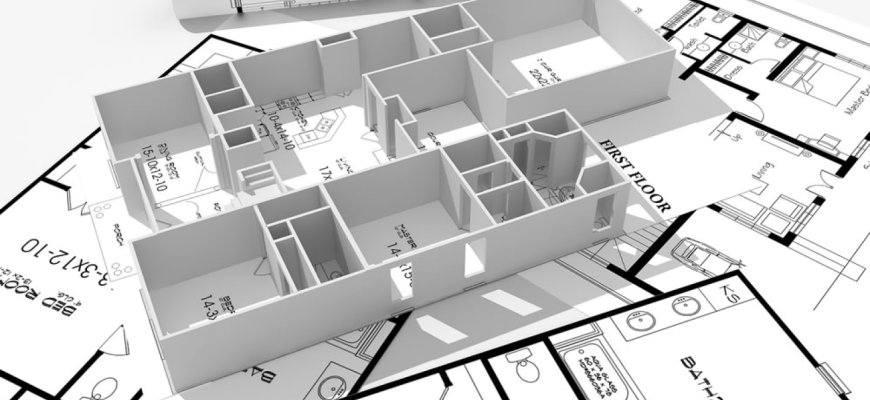
In essence, 2D drafting services involve the creation of precise geometric representations for designs using computer-aided design (CAD) software. Drawings can include floor plans, elevations, sections, and layouts for electrical wiring, ng pipeline diagrams based upon the specific business.
Drafts' primary function is to illustrate the dimensions, materials, and construction methods, as well as other crucial details for everyone involved in the work. When working with professionals who have a solid background in drawing, the teams can ensure that their concepts will be realized into guidelines-based documents ready to be utilized.
The Importance of Precision
In the context of designing and building, even a tiny deviation in the measurement or design can result in expensive revisions or even delays in the work. One of the most significant advantages of two-dimensional drawing is the focus it places on precision. Professionally trained drafters will ensure that all the elements of an idea are precisely dimensioned, scaled, and aligned to meet the latest technology specifications.
These drawings are used for the means of communication between builders, designers, engineers, and regulators. Any miscommunication during the process can lead to significant fines and penalties for financial and legal violations. This is the reason why it is essential to rely on solutions that guarantee the highest level of accuracy and complete transparency in all instances.
Supporting Every Phase of the Project
Drawing in 2 dimensions plays crucial functions throughout the entire lifecycle of any project:
1. Concept and Planning
In the beginning, 2D drafting services help visualize the layout, the intention behind the design, and spatial relationships. The drawings enable teams to think about alternative options, adjust their designs according to their design, and establish the foundation to progress into more precise designs.
2. Design Development
The design develops 2D sketches to enhance the design to identify potential issues and begin coordination with different disciplines, such as structural engineering, as well as the HVAC design.
3. Regulatory Approval
Before construction begins, it has to be approved by the department responsible for planning and a building authority. The authorities usually require two-dimensional plans to verify that the design complies with the regulations on zoning or safety regulations, in addition to the construction code.
4. Construction and Fabrication
As they implement the course of construction, builders and contractors use two-dimensional plans to direct the construction crews. It doesn't matter whether the plan is a floor plan, wiring diagram, or sheets of fabricated parts. The documents provide the essential directions to help bring the design into being.
5. As-Built Documentation
When construction is completed, new drawings in 2D are usually created to illustrate the present details of the building. They are crucial to guarantee ongoing maintenance, improvements, or the management of buildings.
Cost and Time Efficiency
The outsourcing of draft jobs to a specialist firm could cut down on time and expense. Instead of handling this job internally, particularly for smaller companies, most businesses opt to work with professional drafters who have the tools, equipment, and expertise needed to finish the job quickly and accurately.
Utilizing 2-D drawing revisions based on CAD, they are more efficient as opposed to traditional hand-drawn techniques. It allows teams to adapt to modifications within the scope of their projects or the feedback of clients without disrupting their work schedules.
Integration into other Design Tools
While 3D modeling has become more popular, it is still based upon a 2D base. The majority of 3D models are designed using 2D drawings, and often, standard drawings are still required for permits or in other documents for construction. Drafting services ensure that 2D drawings are precise and accurate and work to be used in BIM as well as 3D workflows within the CAD software.
In the context of environments where 2D and 3D assets are used, having solid, well-organized 2D documentation aids in collaboration across different teams as well as software platforms.
Customization and Flexibility
Numerous projects employ a similar formatting. If you're conducting a renovation on your house, commercial construction, or industrial pipe system, the specifications for drawing will be different. This is the reason why custom 2D drawings are highly helpful.
Professional drafters can tailor documents to meet your specific requirements--whether that includes using your company's title blocks, applying local building standards, or following international drawing conventions. The customization process ensures that the documentation is professionally designed and in line with the goals of your project.
Industries That Rely on 2D Drafting
2D drawing is used in a variety of fields:
-
Architecture to show floor plans, elevations, as well as sections to build construction
-
Engineering encompasses structural, civil, mechanical as well and electrical engineering.
-
Construction - for designing plans for shop layouts, sites, etc. Layouts, details, and perspectives
-
Manufacturing - Part drawing, fabrication, assembly, and drawings
-
Interior Design is utilized to design furniture, space plans, and lighting diagrams.
In all the fields, to establish clear, uniform, structured, standardized, and organized plans to ensure that each.
Read blog: Top 10 Best Free CAD Software in 2025 for Designers and Architectural Engineers.
Final Thoughts
In our highly detailed and fast-paced environment, accurate 2D drawing tools provide more than benefits; they're an absolute necessity. Drawings provide the foundational technical information for anything from initial design plans to construction plans. They help to coordinate, improve effectiveness, reduce risk, and ensure projects are completed on time and budget.
If you're beginning an endeavor that's brand-new and constructing complex mechanical structures or making plans for a review, the help of seasoned drafters can make a massive difference. Through focusing on precision, clarity and clarity and customization, 2D drawing is a foundation for the success of any design or construction venture.